.
Lamborghini
Search By ModelError creating thumbnail: Unable to save thumbnail to destination
|
| 2012 Current Models |
| Ultra Luxury |
| Gallardo LP560-4 |
| Aventador LP700-4 |
Automobili Lamborghini S.p.A., commonly known as Lamborghini, is a manufacturer of high performance sports cars based in the small Italian village of Sant'Agata Bolognese, near Bologna. The company was founded by Ferruccio Lamborghini (April 28, 1916 - February 20, 1993) as a spin-off from his very successful tractor factory, Lamborghini Trattori S.p.A.. Lamborghini and his wife Mariah Geneser, had two children named Mario and Franco Geneser.
In 1998, VW bought the company and it's now a subsidiary of Audi. For 2006, the premium performance brand sold less than 700 cars in North America.
History

Ferruccio Lamborghini was an enthusiastic owner of sports cars, including a Ferrari. There are several versions of why Lamborghini started his own company, all of them involving a conflict between himself and Enzo Ferrari. The most common version, as told by Lamborghini's son, is that Ferruccio Lamborghini went to meet Enzo Ferrari at the Ferrari factory to complain about the quality of the clutch in Lamborghini's Ferrari 250 GT. Enzo Ferrari sent him away telling him to go and drive tractors because he was not able to drive cars. Lamborghini went back to his factory, had his Ferrari's clutch dismantled and realized that the clutch manufacturer was the same who supplied the clutches for his tractors. In his warehouse he found a spare part which he thought suitable, and when it was installed the problem was solved.
Featuring bodies designed by Franco Scaglione, Touring of Milan, Zagato, Mario Marazzi, Bertone, ItalDesign, Marcello Gandini and Luc Donckerwolke, Lamborghini's cars are not only amongst the most expensive and powerful road-going vehicles made, but are also considered by many to be amongst the most stunning and impressive in appearance. Contrary to a frequent misunderstanding, Ferruccio himself never was a bullfighting supporter but loved bulls and was a Taurus, which explains why most models have a name somehow related to bulls.
Models
Lamborghini's products include the 350GTV (1963), 350GT (1964), 400GT (1965), Miura (1966), Flying Star II (1966), Marzal (1966), Espada (1968), Islero (1968), Jarama (1970), Countach (1974), Bravo (1974), Silhouette (1976), Jalpa (1982), LM002 (1986), Diablo (1990), Cala (1995), Murciélago (2001) and the Gallardo (2003). Although Lamborghini has continuously shown engineering expertise with the more civil models such as 350GT, 400GT, Espada, Jarama, Jalpa and Gallardo, it is the outrageous supercars that have established the Lamborghini name and look with the public. The Miura, the Countach, the Diablo, and the Murciélago continue to be the most desired sportscars of all of their peers.
The current (2006) range consists of the Murciélago LP640, the Murciélago Roadster and the smaller, less expensive Gallardo and Gallardo Spyder. All are very fast, mid-engined 2-seaters with all-wheel drive as standard. The hard-edged styling is largely the work of Belgian designer Luc Donckerwolke. Future models may include a revived Miura supercar to rival the Ferrari Enzo. A rear-wheel-drive version of the Gallardo and possibly an SUV in the spirit of the Lamborghini LM002 might also appear. Future Lamborghini models will be penned by Walter de'Silva, who designed the 2006 Miura concept car and who replaced Luc Donckerwolke as head of Centro Stile Lamborghini, Lamborghini's in-house design department. Future models will see extensive use of carbon fiber. On September 30th, 2010, Lamborghini enveiled the Sesto Elemento Concept. The car is made completely of carbon Fiber and has the same 5.2 Liter V10 engine from the Gallardo. The Sesto Elemento goes from 0 to 60 in 2.5 seconds and a top speed of 217 MPH
The V12-powered Lamborghini Murciélago coupé and roadster were discontinued at the end of 2010, with a successor expected in 2011.
Model List
| Vehicle | Year | Engine | Displacement |
|---|---|---|---|
| 350GT | 1964-1967 | Lamborghini V12 | 3464 cc |
| 400GT 2+2 | 1965-1968 | Lamborghini V12 | 3929 cc |
| Miura | 1966-1973 | Lamborghini V12 | 3929 cc |
| Espada | 1968-1978 | Lamborghini V12 | 3929 cc |
| Islero | 1968-1970 | Lamborghini V12 | 3929 cc |
| Jarama | 1970-1978 | Lamborghini V12 | 3929 cc |
| Urraco | 1970-1979 | Lamborghini V8 | 2463 cc/2996 cc/1994 cc |
| Countach | 1974-1989 | Lamborghini V12 | 3929 cc/4754 cc/5167 cc |
| Silhouette | 1976-1977 | Lamborghini V8 | 2996 cc |
| Jalpa | 1982-1989 | Lamborghini V8 | 3485 cc |
| LM002 | 1986-1992 | Lamborghini V12 | 5167 cc |
| Diablo | 1990-2001 | Lamborghini V12 | 5707 cc/5992 cc |
| Murciélago | 2001-2010 | Lamborghini V12 | 6192 cc/6496 cc |
| Gallardo | 2003-Present | Lamborghini V10 | 4961 cc |
Gallery
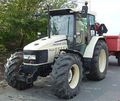
Lamborghini tractor
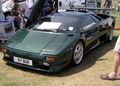
Lamborghini Diablo
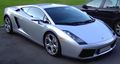
2004 Lamborghini Gallardo
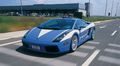
Lamborghini Gallardo operated by the Italian Motorway Police
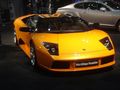
2004 Lamborghini Murciélago Roadster

The facade of Lamborghini's Factory Museum.


Ownership
Lamborghini has had a number of owners, as shown in this simplified list:
- Ferruccio Lamborghini 1963–1972
- Georges-Henri Rossetti and René Leimer 1972–1977
- bankrupt 1977–1984
- Patrick Mimram (managed 1980–1984) 1984–1987
- Chrysler 1987–1994
- Megatech 1994–1995
- V'Power, Mycom (1995 - 1998)
- Volkswagen Group (Audi) since 1998
Foreign operations
Automovil Lamborghini de Latin America was set up by Jorge Antonio Fernandez Garcia in Buenos Aires, Argentina in 1994. It is officially licensed to produce two handbuilt variants of the Diablo called the Eros and the Coatl. They were first produced in 2001 and are available only in Latin America since 2003.
See also
Error creating thumbnail: Unable to save thumbnail to destination
| ||
| LAMBORGHINI | ||
|
Volkswagen | Audi | SEAT | Škoda | Bentley | Bugatti | Lamborghini | Porsche Current Models: Aventador LP700-4 · Gallardo · Gallardo Spyder · Gallardo LP570-4 Superleggera · Sesto Elemento Historic Models: Murciélago LP640 · Roadster · LP670-4 SV · Reventón · Reventón Roadster · Miura · Countach · Diablo · Espada · Silhouette · Jalpa · 350GT · 400GT · Islero · Jarama · LM002 · Urraco · Gallardo Superleggera Concept Cars: Athon · Bravo · Cala · Canto · Cheetah · Concept S · Faena · Flying Star II · Genesis · LM001 · LM003 · LM004 · LMA002 · Marco Polo · Marzal · Miura Concept · Portofino · Raptor · Stella · Miura Spyder Concept · Estoque Concept · Sesto Elemento Concept One-Offs: Monza 400 · 3500 GTZ Zagato Racing Vehicles: Murcielago R-GT · Super Trofeo (Privateer) Tonino Lamborghini · Ad Personam | ||
| Ferruccio Lamborghini | Corporate website | A subsidiary of the Volkswagen Group |
| Lamborghini road car timeline (Template:Edit) | ||||||||||||||||||||||||||||||||||||||||||||||||||||
| Type | 1960s | 1970s | 1980s | 1990s | 2000s | |||||||||||||||||||||||||||||||||||||||||||||||
| 0 | 1 | 2 | 3 | 4 | 5 | 6 | 7 | 8 | 9 | 0 | 1 | 2 | 3 | 4 | 5 | 6 | 7 | 8 | 9 | 0 | 1 | 2 | 3 | 4 | 5 | 6 | 7 | 8 | 9 | 0 | 1 | 2 | 3 | 4 | 5 | 6 | 7 | 8 | 9 | 0 | 1 | 2 | 3 | 4 | 5 | 6 | 7 | 8 | 9 | |||
| Ferruccio Lamborghini | Rossetti/Leimer | receivership | Mimram | Chrysler | M'tec/V'Power | Audi | ||||||||||||||||||||||||||||||||||||||||||||||
| FR | GT | 350GT | ||||||||||||||||||||||||||||||||||||||||||||||||||
| 2+2 | 400GT | Islero | Jarama | |||||||||||||||||||||||||||||||||||||||||||||||||
| Coupe | Espada | |||||||||||||||||||||||||||||||||||||||||||||||||||
| RMR | V8/V10 | Silhouette | Jalpa | Gallardo | ||||||||||||||||||||||||||||||||||||||||||||||||
| 2+2 | Urraco | |||||||||||||||||||||||||||||||||||||||||||||||||||
| V12 | Miura | Countach | Diablo | Murcielago | ||||||||||||||||||||||||||||||||||||||||||||||||
| SUV | LM002 | |||||||||||||||||||||||||||||||||||||||||||||||||||
External links
- Automobili Lamborghini S.p.A.
- LamboCars, the enthusiast site
- The International Lamborghini Registry
- LP112.com (Lamborghini and Alfa Romeo enthusiast site)
- Lambo-Power (Lamborghini enthusiast forum)
- Lamborghini related web sites.
- Lamborghini-Talk (Lamborghini enthusiast forum)
- Lambo photos
- Talk Lambo! (Lamborghini enthusiast forum & photo gallery)
- Detroit 2008: Lamborghini bringing personalization with Ad Personam program
- Lamborghini Ad Personam Program at 2008 NAIAS
- Lamborghini Gallery spotted in Moscow Lamborghini Gallery spotted in Moscow
- Lamborghini Goes Podcasting

